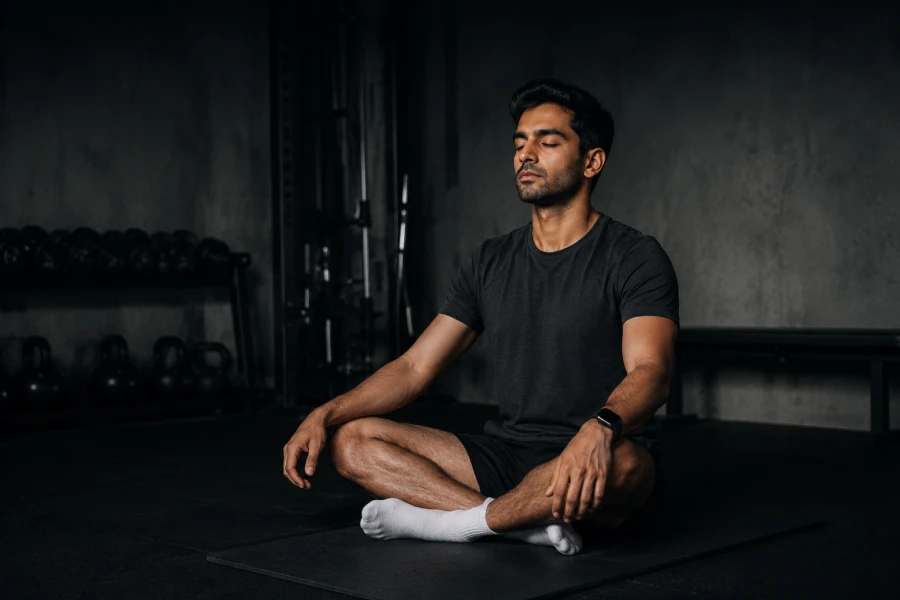
Quick meditation for busy people does not require finding an empty hour. It begins by noticing the small spaces that already exist between one demand and the next. A parked car, a closed laptop, a waiting kettle, or the minute before a call can become a place to pause. The practice is simple: feel the body, follow a few breaths, and let attention return to the present task. Nothing dramatic needs to happen. You are not trying to silence every thought. You are creating a brief change in pace. When meditation fits ordinary transitions, consistency becomes more realistic. Calm stops depending on perfect conditions and starts becoming available inside real life.
A practice is easier to repeat when the starting point requires almost no preparation. Choose a moment that already has a natural pause. Sit before opening the inbox, breathe after school drop-off, or stop briefly before entering the house. Keep the first session under five minutes so beginning feels uncomplicated. A set of quick meditation techniques can provide several options without forcing one method. You might count breaths, notice contact with the chair, or listen to nearby sounds. The technique matters less than the repeatable cue. When the same moment regularly invites attention, the habit begins forming before motivation has time to argue.
Quiet rooms and carefully arranged cushions can be pleasant, but they are not prerequisites. Meditation can happen in an office chair, on public transportation, or beside a kitchen counter. The environment may still contain noise, movement, and unfinished responsibilities. Rather than fighting those conditions, include them in awareness. Hear the sound, feel the breath, and notice the urge to rush. This makes the practice more transferable because daily life rarely becomes completely still. Comfort matters, so choose a safe position and avoid meditating while driving or performing tasks that require full attention. A practical setting is simply one where you can pause without creating risk or unnecessary interruption.
Task switching can leave attention scattered across several unfinished thoughts. A short pause creates a cleaner transition. Close the previous document, place both feet on the floor, and take three unhurried breaths. Name the next task silently, then begin. This sequence takes less time than checking another notification, yet it changes the quality of entry. A focus reset can be especially useful before creative work, difficult conversations, or detail-heavy decisions. The pause does not erase pressure. It gives your mind a clear point of return. Repeated throughout the day, these transitions can reduce the sense that every task is arriving on top of the last one.
Strong emotions can make meditation feel impossible, yet the practice does not require instant calm. Begin by acknowledging what is present without demanding that it disappear. Feel where tension shows up in the body. Lengthen the exhale slightly if that feels comfortable. Notice the support beneath your feet or back. These sensory details can create steadiness while the emotion continues. If the situation requires action, use the pause to choose the next useful step. Meditation should not replace professional mental health care or necessary problem-solving. It can, however, create a brief space between feeling and reaction. That space may help you respond with greater clarity and less automatic urgency.
Many people postpone calm because the schedule looks too full. The better question is whether a few existing minutes can be used differently. Waiting for a page to load, arriving early, or finishing lunch can become a mindful pause instead of another scrolling window. A daily calm practice helps collect these moments into a recognizable rhythm. The total time may remain small, but the repeated returns matter. They remind you that attention can be redirected. Over time, the practice may also reveal which parts of the day create the most tension. That awareness supports better boundaries, clearer planning, and more intentional recovery outside meditation itself.
Repeatability grows from a clear minimum. Decide what counts on the busiest day. It may be three breaths before opening email or one minute after lunch. Keep that version available even when longer sessions become possible. Use a gentle reminder, but avoid filling the day with alerts that feel like demands. A visible cue, such as a small object beside the laptop, may work better. Track completion lightly if it encourages you, and stop tracking if it creates pressure. The practice should become easier to return to after interruptions. Consistency is not an unbroken streak. It is the skill of beginning again in the next available moment.
Busy lives rarely offer perfect silence, yet they contain more transitions than we notice. Those transitions can become small doorways back to attention. Choose one dependable moment and pair it with a simple technique. Keep the practice brief enough that resistance stays low. Let thoughts remain present while you return to breath, sound, or physical sensation. After several days, observe whether certain pauses feel especially useful. Build around those rather than adding sessions everywhere. Meditation becomes sustainable when it respects the life you already have. A few deliberate minutes will not remove every stressor, but they can change how you enter the next conversation, decision, or task.



Leave a comment